PEOPLE & SYSTEMS
People can only be as effective as the system allows.
The good news: systems can be designed.
What I keep seeing
In most organisations that call me in, I see one of two patterns.
PATTERN 1
The first: people are committed. Leaders take responsibility. Teams work intensely. And still, the impact falls short of what’s possible.PATTERN 2
The second: motivation declines. Responsibility is demanded rather than taken. There is a lot of talk about culture, mindset and principles. And still, little changes.
At first glance, these situations look different. But in both cases, the focus is mainly on people – on attitude, communication and how leaders show up.
In both cases, it’s not leadership that reaches its limits – but the structure in which leadership happens.
The question I ask myself: does the system these people work in actually support what is expected of them? Or does it unintentionally reinforce the opposite?
The pattern is always the same: the core issue is not behaviour itself – but the structure that shapes it.
Where this became concrete
Industrial company
An industrial company with several thousand employees was missing statutory deadlines – not out of negligence, but because too much was running in parallel and no one was steering the overall system. I made workflows visible and introduced a system that enabled focus and prioritisation. The backlog was reduced consistently.
The client’s words: “For the first time, we are ahead of the wave.”
Marketing agency
A marketing agency with 300 people where internal improvements had been lagging behind day-to-day client work for years – because there was no mechanism to protect internal work. I made the tension between client delivery and internal initiatives visible, and set up portfolio management that deliberately controls how much internal work enters the system.
The result: significantly more room for organisational development – and noticeable relief for employees.
Post-merger integration
A company after an acquisition that needed to handle integration on the side – without clear ownership, without sufficiently robust structures. I built a lean system that made internal initiatives visible, clarified responsibilities, and embedded integration as a managed process.
Revenue could be secured despite the additional burden – and room was created for targeted organisational development going forward.
Why I see it this way
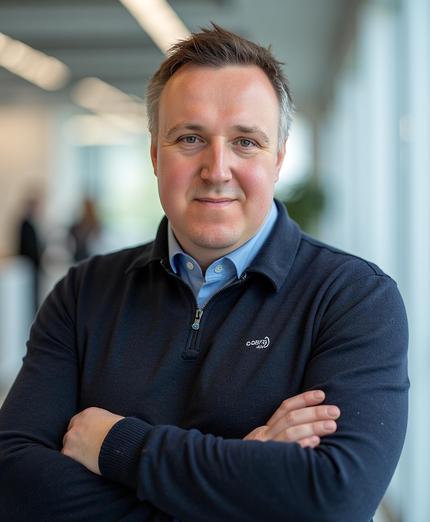
As a software developer and architect, I learned to build systems – not just functions. That way of thinking shaped me. Later, as a Scrum Master and Agile Coach, I saw how much was said about attitude, principles and culture – and how often the structural logic remained untouched.
That tension stayed with me. Today, it is at the core of my work: I help organisations redesign the connection between their people and their systems – not in the abstract, but where it becomes tangible in everyday work.
How I work – and what makes me different
I always start with the concrete reality. No audit, no assessment framework – I listen. I talk to leaders, teams, individual employees. I want to understand how work actually flows. Not how it’s supposed to flow according to the process manual, but what the day-to-day really looks like.
Who decides what? What gets prioritised – and what doesn’t? Where does work pile up? Where does responsibility remain implicit?
These conversations quickly produce a clear picture – not just of where things are stuck today, but of how the organisation actually needs to be steered. What structures it needs. What decision paths. What mechanisms.
But I also know: organisations don’t change by blueprint. Every step reveals new realities – problems no one had seen before, dependencies that only surface in practice. That’s why I work incrementally: targeted interventions that have immediate impact while paving the way towards a sound architecture. Making workflows visible, limiting the amount of parallel work, clarifying decision paths, making roles and responsibilities explicit.
Small steps. But architectural steps – each one part of a larger picture. First visible changes often emerge within a few weeks.
Many organisations work on culture, mindset or leadership principles. I think that matters – but it falls flat when surrounding structures remain untouched. That is why I don’t work only on beliefs, but on the conditions under which those beliefs are meant to have impact – on structures, processes, mechanisms and communication patterns.
And I don’t stop at the concept. In many consulting projects, a smart analysis is created, a recommendation is made – and implementation fizzles out. But that is exactly where it is decided whether change endures or fades – in the phase where an idea must become a functioning control architecture. An architecture that doesn’t just make sense on paper, but actually works in the day-to-day reality of the organisation.
A client once put it this way: “Sebastian raised problems from the very beginning that we neither saw nor considered relevant at the time. But it was only through the concrete steps we took together that we realised how right he was – and he had the right solution every time.”
I stay. I implement with you.
I stay with you through the phase where ideas become working mechanisms.
Next step
If you have the sense that your organisation can do more than it currently shows – and that it’s not about the people – then let’s talk.
I prefer to start with a conversation. Open, without an agenda, without a sales pitch. Simply: what is going on in your organisation? And where could the leverage be? From there, it usually becomes clear quite quickly whether working together makes sense.